
This page gathers the outcomes of the Erasmus+ project EmpOL, focused on integrating outdoor education into youth work. As a key part of the project, participants were challenged to lead an outdoor activity in their home communities, applying the tools and methods learned during our training. Below, you can explore these unique activities, ranging from nature-based mindfulness to adventurous team-building exercises, demonstrating the versatility and power of outdoor learning. To learn more about the project’s background and objectives, please visit the official project page.
Noa acticity
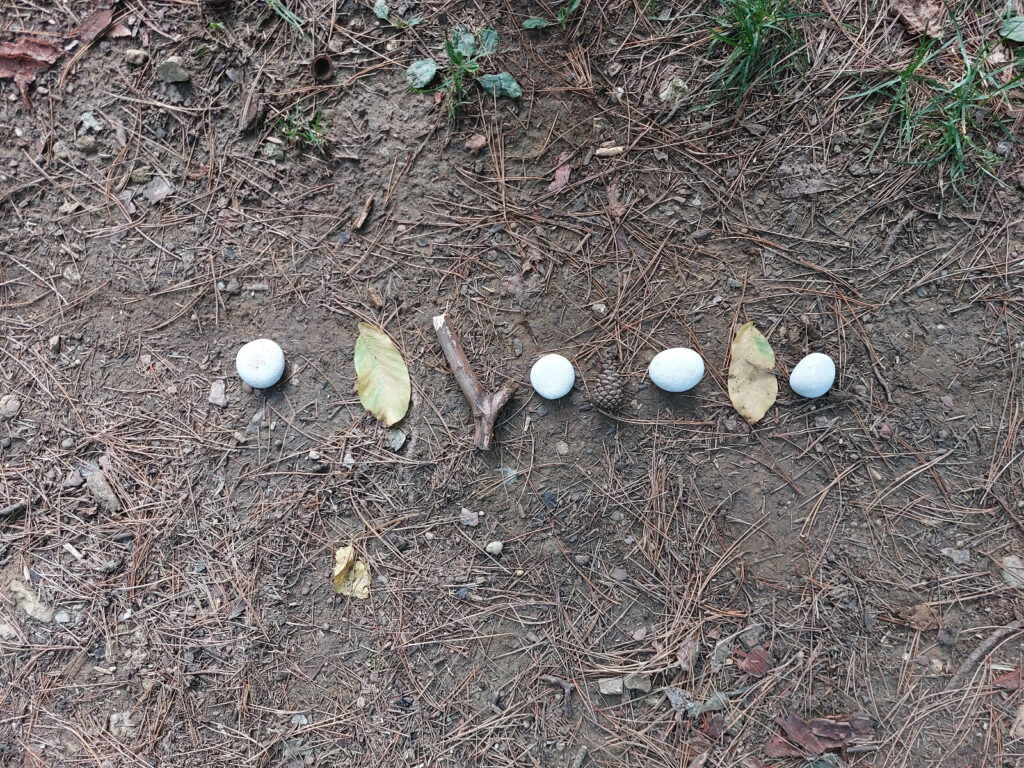
Firstly we split the participants in two equally-numbered groups, it doesn’t matter how many people are there or how many groups are formed it is just important that they are equally split. We take the materials from nature such as in this case: pebbles, stick, cones and some leaves. We then make a two different patterns out of those materials for each group placing them in lines. When the activity officially starts, each team must remember the pattern of the materials in a time frame of 15 seconds. After they have it memorized and are ready, the teams switch each so that they have others’ team patterns in front on them, they have to mess it up, after they switched it up the teams return to their patterns and try to guess what the other team shuffled in their pattern.
Those who put the pattern in the correct order first, they get a reward.
Difficulty levels: Start with simple patterns (5–6 objects) and increase complexity (more objects or longer sequences).
Fairness: To avoid one group having an easier pattern, make sure both patterns have a similar number and variety of objects.
Grete acticity
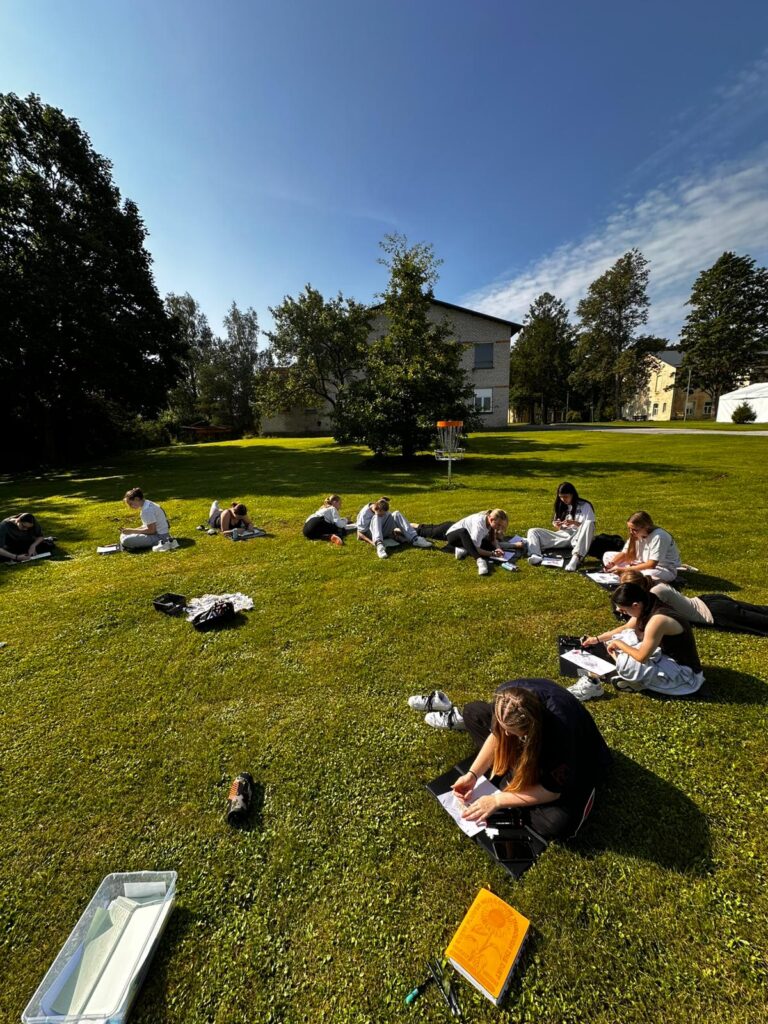
My follow-up activity was aimed at young people who participated in the dance camp. I chose the topic of mental health and mindfulness in order to offer young people a space and time where they could feel safe and good.
The structure of my classes was mainly built around inner journeys and meditation — something that, as it turns out, I am very skilled at. My classes often made the children quite emotional, since all the kindness I channeled into them through meditation touched them deeply. At the same time, it was hard for them to accept, because they were not used to allowing themselves to take in positivity and kindness. My classes were the only ones in the camp where you could actually see children crying — but it was positive crying, as they managed to resolve something in their minds while feeling safe with me. For reflection during the lessons, we used stickers and drawing.
With one group from the camp, I developed especially close relationships. They even asked me for four lessons, so that they could express their emotions with a person they trusted and felt safe with. In the final class, after the inner journey and meditation, we even went to the store, where I treated them to ice cream!
This coming November, I will also have the chance to offer them an additional subject at the dance school, where we will dive even deeper into team building, maintaining group spirit, mental well-being, and connecting with oneself. They don’t know it yet, but the final lesson of the course will end with smashing plates and glasses — a way to release anger and negativity!
Altogether, about 70 young people participated in my activities.
Dusko acticity
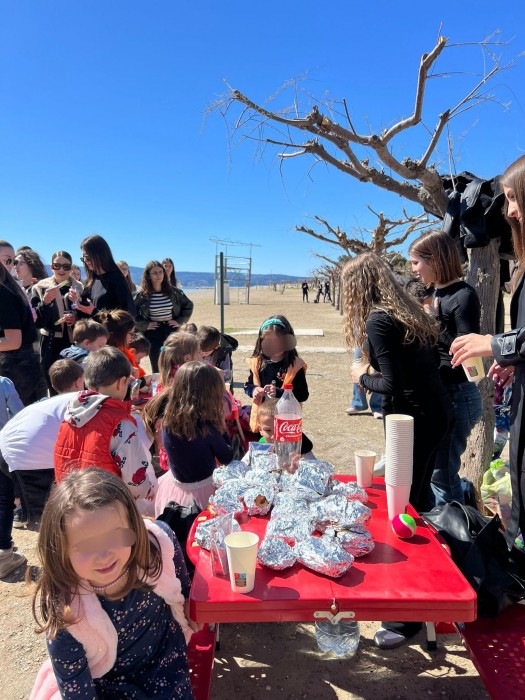
Outdoor activity on the sandy beach with the residents of the children’s home in Split
Students of my class, together with their homeroom teacher, organized a valuable activity on a sandy beach in Split, where they hosted the residents of a children’s home. The aim of the gathering was to provide the children with opportunities for play, friendship, and a sense of belonging, while also encouraging students to develop empathy, solidarity, and responsibility toward others.
The day began with an exciting treasure hunt, where the hidden “gold” turned out to be sweet chocolate treats. The game sparked plenty of laughter and joy, and at the end, the two most successful treasure hunters received special prizes, adding even more excitement and happiness to the activity.
This was followed by various beach games – from building sandcastles to fun competitions – where the emphasis was not on who was the best, but on enjoying the moment together and supporting one another.
A particularly warm moment was the shared lunch, which allowed students and children to relax, talk, and get to know each other better. The lunch was not just a meal, but also an opportunity to share experiences, exchange laughter, and build new friendships.
Spending time outdoors, as well as this activity itself, proved to be beneficial and valuable for all participants. For the children from the home, it was a chance to experience warmth, togetherness, and a joyful day; for the students, it was an enriching experience that inspired reflection on the importance of humanity and solidarity.
This activity showed how small gestures of care and moments spent together can mean so much to children who often grow up without the presence of family. It was also a strong lesson for the students, who learned how important it is to give their time and attention to those who need it most.
At the end of the day, everyone parted with smiles and the wish to continue organizing such gatherings in the future. The experience left a lasting impression on both the children and the students, proving once again that kindness, friendship, and care for one another can brighten any day.
Elefteria acticity
This activity was engaging, fast-paced, and encouraged both focus and resilience. I noticed how each participant was motivated not only to score but also to defend their position by avoiding elimination. Personally, I felt the pressure of time while shooting, which pushed me to concentrate more on accuracy. The competitive element created excitement, but at the same time, it was playful and encouraged bonding with others through shared laughter and cheering. It also revealed how important it is to remain calm under pressure.
Impact
Physical impact: Improved hand-eye coordination, shooting accuracy, and quick reflexes while moving under time pressure.
Social impact: Fostered teamwork, sportsmanship, and healthy competition. Even though it was competitive, participants supported each other and celebrated good shots.
Emotional impact: Boosted confidence for those who managed to score quickly, while teaching resilience to those who had to try multiple times before succeeding.
Cognitive impact: Helped develop decision-making and focus in high-pressure situations, since participants had to shoot efficiently while knowing elimination was possible.
Method
Setup:
One basketball hoop and at least two basketballs.
Participants line up behind a marked free-throw line (or another set point).
Rules:
The first two players in line each have a ball.
The first player shoots; as soon as they release the ball, the second player may begin shooting.
If the first player scores before the second, they retrieve their ball and go to the back of the line.
If the second player scores before the first, the first player is eliminated.
If the second player scores twice in a row, the first player is also eliminated.
Play continues until only one participant remains — that person is the winner.
Duration:
Depending on the number of players, the game usually lasts 10–20 minutes.
Safety considerations:
Ensure enough space so players don’t bump into each other while chasing rebounds.
Remind participants to avoid aggressive pushing.
Volha acticity
I decide to choose urban historic quest as follow-up activity after our inspiring summer school at Elva.
Urban Quests are bright and positive way to spend time outdoor actively and intellectually. Historical material does not just remain in the memory as pages of text and two-dimensional images from a textbook – quests literally “revive” this knowledge, leading participants along the same paths that prominent figures in the past walked.
The target audience of quest is Belarusian emigrants in Vilnius.
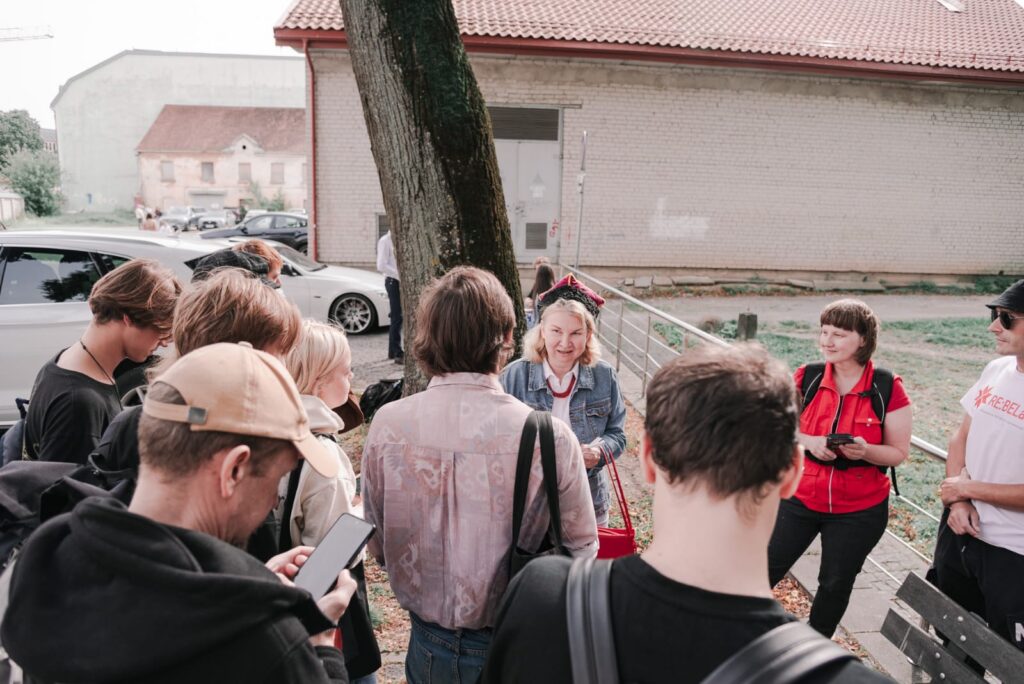
Urban quest took place on September 14, 2025 in old town of Vilnius , with seven teams of two to six participants (30 participants). The quest consisted of 11 tasks dedicated to the events and people of the 1863-1864 uprising. Theme of 1863-1864 uprising is very important for historical memory of belarusians (as well as lithuanians and poles) and their awareness of themselves as a European nation.
Participants searched the streets of Vilnius for artifacts based on the tasks and posted their answers to a Telegram bot developed with technical support from the urban tour startup Urban Legend.
The quest helps to update knowledge on historical topics and use modern technologies for this. Our basic rule is that you can and must Google! Thus, IT skills and critical thinking are developed
The quest includes elements of storytelling : the quest is structured in such a way that its participants help the rebels find the password words. At the end of quest each participant received souvenirs commemorating the quest, and the 3 winning teams received prizes. The winners were the teams that completed the quest the fastest. The prizes were awarded at an afterparty at the themed venue Karchma 1863. Souvenirs and prizes were concerned with the theme of our event and included the symbols of 1863-1864 uprising.
A very important event was the Art-Reflection, masterfully conducted at the afterparty by Gleb.
Our KPI was to attract 30 people to participation in our quest and this KPI was completed.
Gleb acticity
My follow-up activity is full of artistic passion 😎
I was very inspired by the activity we had in Estonia, so I decided to rethink it and bring it into a new context.
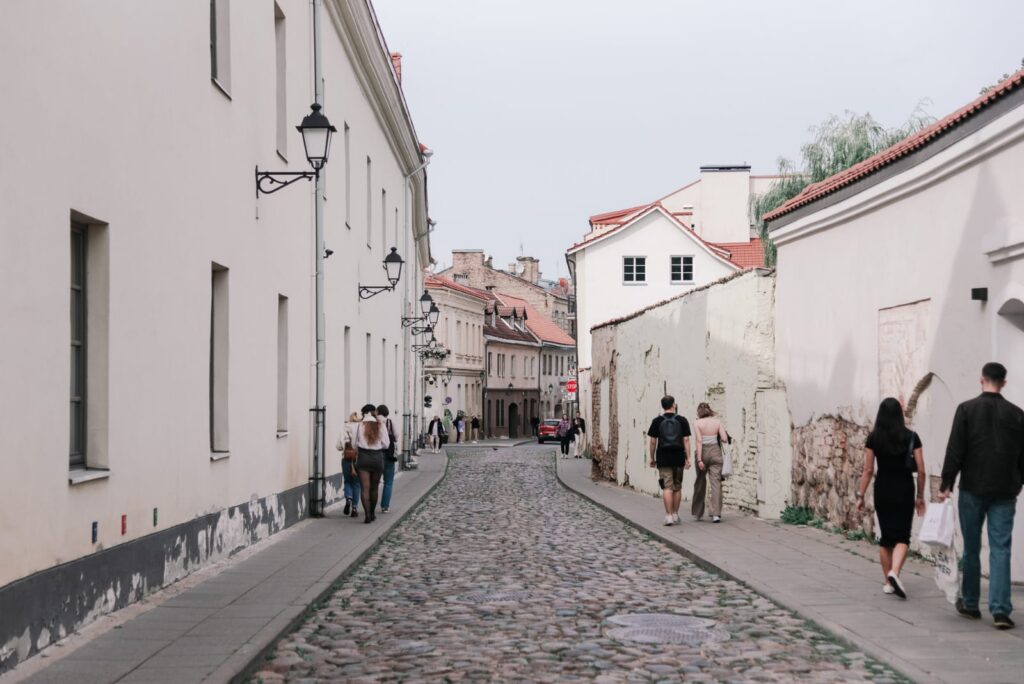
We organized a big historical quest dedicated to the fascinating events of the city of Vilnius. People split into teams and tried to find famous places in the Old Town as quickly as possible, following the quest tasks. At the final location, where participants had dinner and listened to a lecture, I prepared an artistic task for them. Its purpose was to refresh in their memory everything they had seen and learned during the quest, in a pleasant and creative atmosphere.
The participants had to create a flag or a coat of arms for their team. It should contain symbols from the tasks they had already completed, something that, in their opinion, reflected the topic — the uprising of Kastus Kalinowski in 1863.
They could show their impressions of what they had seen and what new things they had discovered for themselves. There had to be at least six symbols.
At the end, they needed to explain what each of them meant.
To determine the winner of this small competition, at least three of their symbols had to be guessed by other teams.
In the final stage, each team presented their drawing. First, the other teams tried to guess the meaning of the symbols, and then the authors explained them. To earn points, at least three symbols had to be recognized. If the guesses matched the team’s explanation, the team received a point.
Maria acticity
After an amazing training at Estonia “EmpoOLE+ TC, funded by Erasmus +, I have decided to organise a follow up activity for my special needs class on the FIRST DAY at school. The activity is both a get together warming up activity and an ice breaker for the new comers. It also facilitated bonding for my lovely people and mind and body coordination for my special soul mates. As you can see they formed teams starting from the oldest to the youngest (they talked about it and found out!) and then they had a little competition between the teams to pass a hula hoop through their legs and arms in the lines their teams created
Andreas acticity
During a youth exchange, I noticed moments of social exclusion, and that inspired me to create a workshop focused on Social Inclusion.
The aim was to raise awareness, promote acceptance, and help us reflect on how we treat others in a group.
For the activity, participants stood in a circle in silence. I placed post-its with different symbols on their backs, and without speaking they were instructed with a simple sentence, “find yourself group.” Quickly, some groups were formed while others were left out, which created a very real feeling of exclusion.
Afterwards, we came together to reflect. We asked questions such as:
* How did it feel to be left out?
* Did you notice any biases or assumptions?
* What challenges appeared when accepting someone different?
This discussion showed us how easy it is for people to be excluded just for being “different.” At the same time, it reminded us how powerful it is when a group chooses to include, respect, and embrace diversity.
Olga acticity
Description: People gathered on the Esplanade in Riga and took part in a quiz on knowledge from different areas – geography, animals, space, science. I am the host, I ask questions, the people give answers in turns or in teams.
Pros:
- Develops erudition and outlook.
- Improves oral speech, the ability to formulate an answer.
- Fresh air and a change of scenery make the process more lively than indoors.
- You can quickly adapt the difficulty of the questions to the age.
Cons:
- It is noisy outside – due to the wind, transport, some people may have trouble hearing the questions.
- Weather affects: heat, rain or strong wind can interfere
- Can be distracted by passers-by, animals, events around.
What it teaches:
- Memorizing and using facts.
- Logical thinking
- The ability to find an answer, even if you don’t know it for sure (the method of elimination).
- The ability to concentrate in the presence of distractions.
- Risks on the street Esplanade:
Children can stray too far from the leader – it is important to keep the group in one place.Possible collisions with cyclists or scooter riders if the game takes place on walkways. Risk of overheating or fatigue if in the sun for too long. They can be distracted by phones or surrounding events (there are often street events and concerts there).
Noah’s activity 🏐
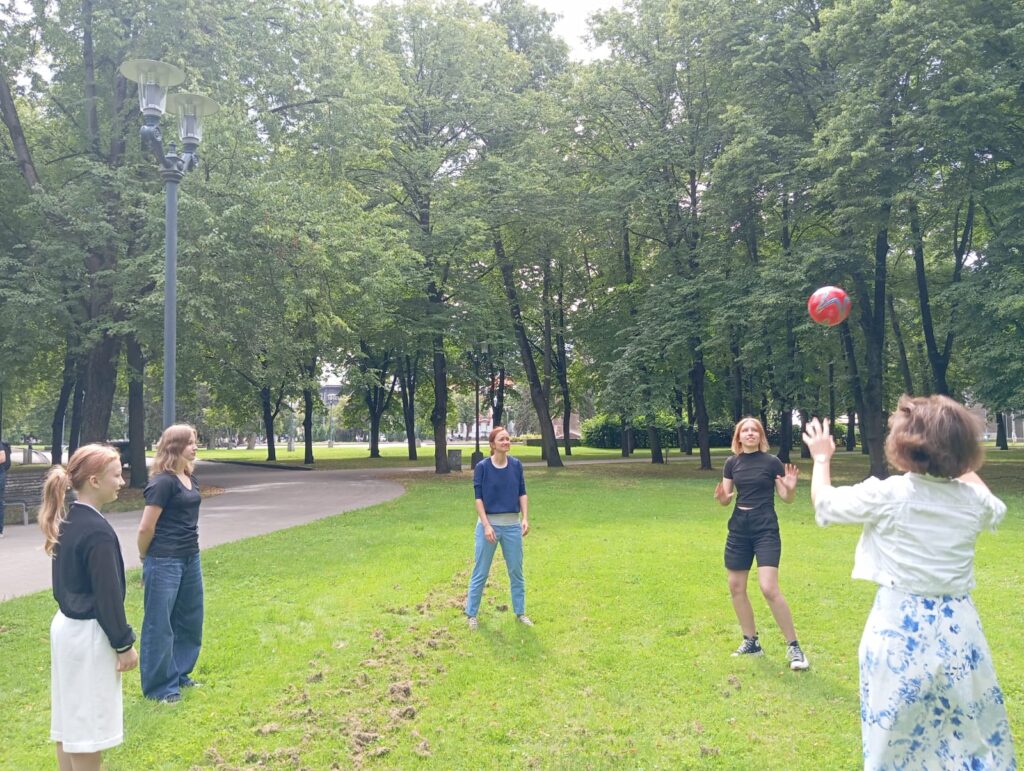
This game is played in a circle and helps develop reaction, knowledge testing
Participants stand in a circle and pass a ball to each other like in volleyball (not catching it) but hitting it with their hands. If someone misses or drops the ball, they are asked a question about Latvian culture. If they cannot answer, they leave the circle.
This activity works best for people aged 15+👤, as participants are more attentive and able to follow the rules. For younger children, the task can be simplified: they can just pass the ball to each other or roll it on the floor.
I really enjoyed this game because it combined dynamics and a chance to test knowledge. The atmosphere was friendly. ✨
Natalja's activity
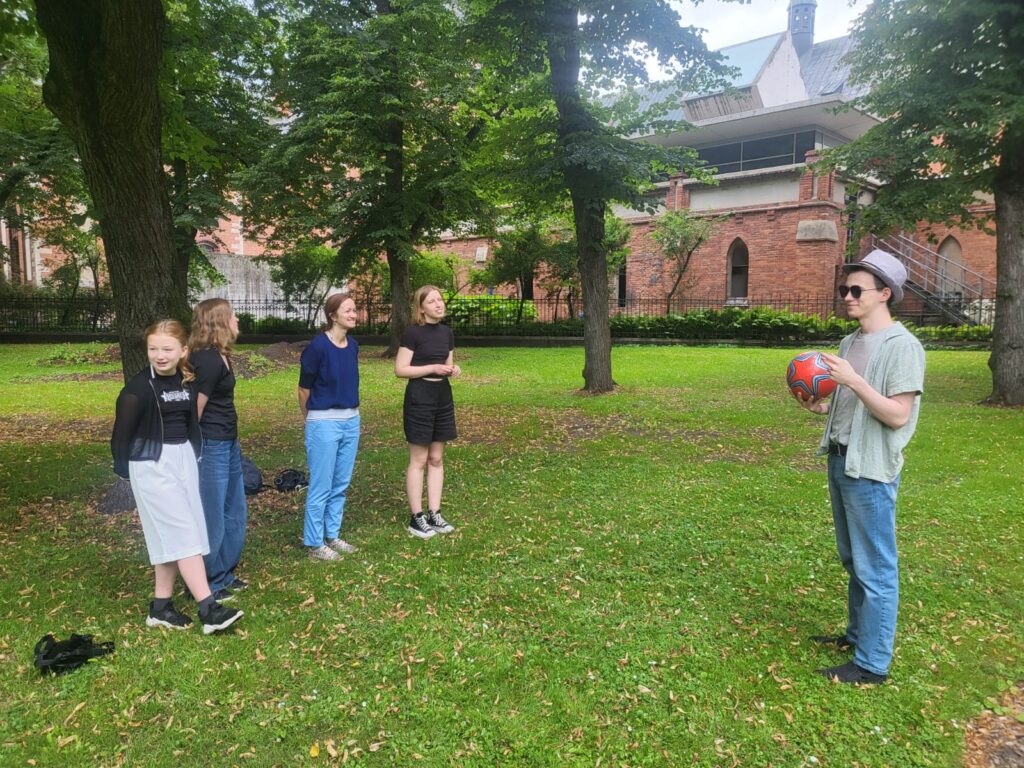
Theater workshop.
1.Voice force training individually and in group.
2.Improvisation. Training of spontaneous speech and emotions.
3.Spontaneous illustration of poetic text.
In the end reflection- discussion about thoughts, emotions and feelings during outside learning and activities.
I realized, that theater workshop can be done not only in the class, but also outdoors.
All tasks can be used for people of different ages, not only for kids, pupils or students, can be used also for adults.
Outdoors theater workshop’s success depends on weather: not comfortable in rainy or very cold weather.
I enjoy this outdoors learning together with participants. We had fine useful time full of joy and fun 🤗 ❤️
Evgenija's activity
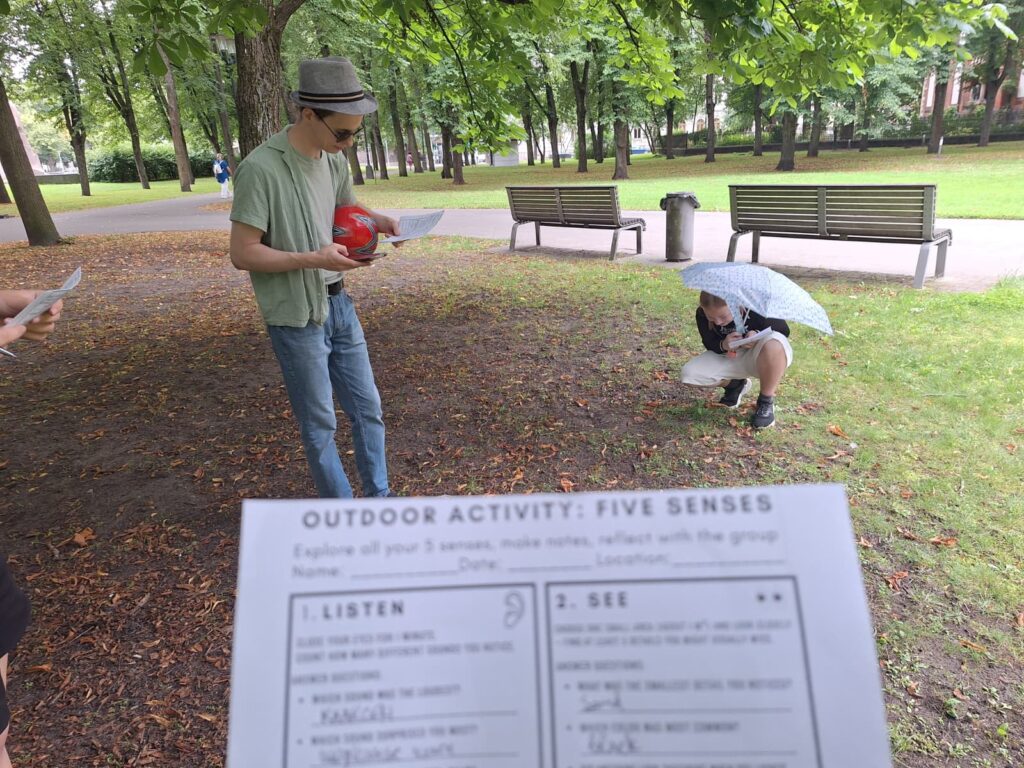
Five senses.
Partipants follow work sheet, complete simple tasks on each of the senses 👂👀👃🤚👅
write down results.
In the end answer reflection questions and discuss with other participants.
➕️the task is suitable for different ages; isn’t hard and develops curiosity.
➖️depending on surrounding can be more or less interesting to do this activity; each partipant might need different amount of time.
My personal reflection: activity went well, maybe some tasks and questions can be adapted a bit better.
Pavel's activity
My activity is Nordic Walking!
I gathered a group of enthusiasts who wanted to spend the day actively and enjoyably walking through the forest, admiring the autumn nature, and learning the technique of Nordic walking.
In the first part of the event, we practiced proper walking technique with poles: posture, steps, arm movement, and breathing. In the second part, we went on a short hike through a small forest on the outskirts of the city. The pace was easy and suitable for everyone. For me, this was a completely new experience, but everything went smoothly — no injuries, everyone enjoyed the activity, and the atmosphere was very positive.
Number of participants: >15 (not counting myself)
Type of activity: forest walk with Nordic walking poles
>Goals for the participants:
1. Will be able to characterise different walking levels.
2. Will be able to describe the content of a walking class.
3. Will be able to communicate the basics of the Nordic walking technique.
4. Will be able to explain how heart-rate control is determined during the walking lesson.
5. Have fun
>Skills to be acquired:
After completing the activity, participants will be able to:
1. Select appropriate Nordic walking equipment.
2. Demonstrate different Nordic walking techniques.
3. Use special pole exercises during the warm-up and main part of the lesson.
4. Use a heart-rate monitor effectively.